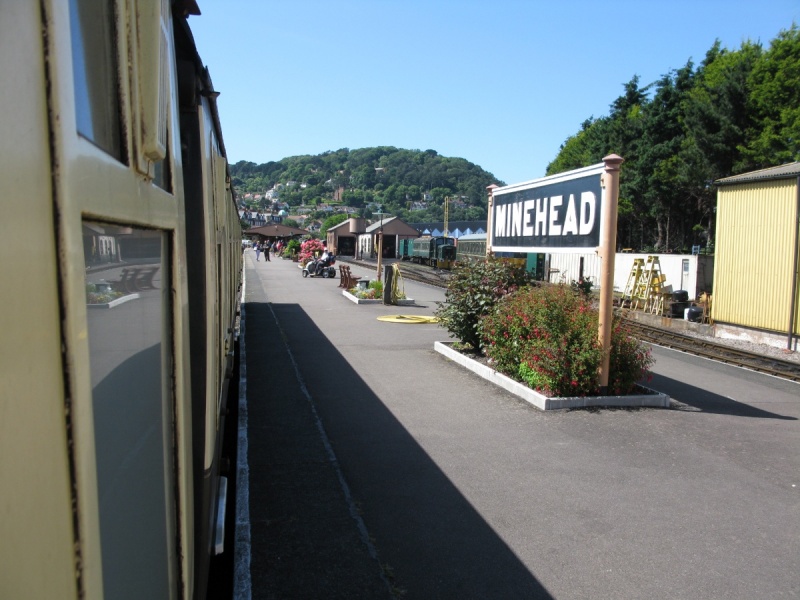
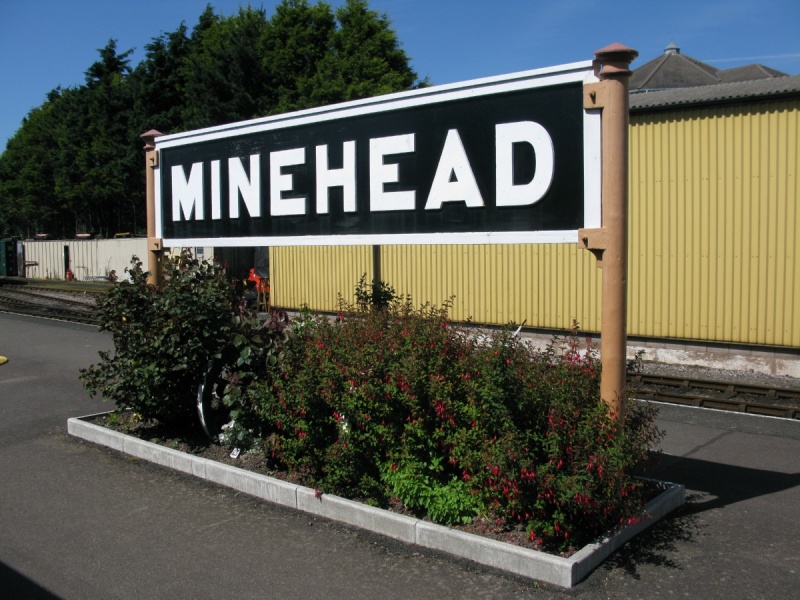
West Somerset Railway, Minehead, Exmoor National Park
[Main photo: the West Somerset Railway at Dunster Station]
The West Somerset Railway runs between Minehead and Bishops Lydeard
The West Somerset Railway runs from the east border of Exmoor at Minehead and Dunster to Watchet and then Bishops Lydeard below the Quantock Hills. It’s a super family attraction for those on holiday in Exmoor National Park and the wider area.
Location of the West Somerset Railway
The start/end stations are Minehead and Bishops Lydeard. There are multiple stops between these on the West Somerset Railway. See the full route description below for details.
Directions to, and parking at, the West Somerset Railway
Follow the A39 to Minehead if you want to start from there. The train station is located behind Minehead Beach so is very easily accessible. There’s parking close by.
Follow the A358 to Bishops Lydeard if you want to start from there. There’s plenty of free parking on site. ‘Bishops Lydeard Station is the southern terminus of the West Somerset Railway and located just off the A358 on the western edge of the village adjacent to the Broad Gauge Industrial Park, five miles from Taunton and seven miles from the M5 motorway (junction 25). There is a large free car park for vehicles under 2.1 metres in height. There are separate disabled car parking spaces and coach parking. Toilets are available, with disabled facilities and baby changing rooms.’ (Source: West Somerset Railway website.)
You can enjoy a section of the West Somerset Railway from one of the many other stations on the route. Again, see the full route description below for details.
West Somerset Railway
The West Somerset Railway is on the West Country’s popular heritage railways. Others include the South Devon Railway that runs between the eastern border of Dartmoor National Park and Totnes in South Devon and Dartmouth Steam Railway that runs between Dartmouth and The English Riviera in South Devon.
The West Somerset Railway runs for over 20 miles between Minehead on the north eastern border of Exmoor National Park down to Bishops Lydeard near the Quantock Hills National Landscape. The train stops at plenty of stations on the way so in addition to a day trip it’s a great way to explore the wider area. The Minehead to Washford section is close to the A39. Williton down to Bishops Lydeard is close to the A358.
We’d recommended taking the train to one of the stations and going for a walk. For example, the Minehead to Watchet railway trip and walk back on the West Somerset Coast Path is superb.
The heritage railway uses both heritage steam and diesel trains.
The history of the West Somerset Railway
‘The Railway [sic] came to Bishops Lydeard in 1862, designed by Isambard Kingdom Brunel. He planned and laid out the line in just four months but never saw it completed as he died in September 1859. In 1874 the line was extended from Watchet to Minehead, now the terminus.’ (Source: information board at Bishops Lydeard.)
Route description and things to do around each station on the West Somerset Railway
The following route description moves west to east or from Minehead to Bishops Lydeard. Reverse if you’re starting from Bishops Lydeard.
Minehead and the West Somerset Railway
Minehead is a major West Country holiday destination with plenty of attractions.
Minehead Beach
Minehead Harbour
South West Coast Path
Dunster and the West Somerset Railway
Dunster is one of the prettiest and most interesting villages in the West Country.
Dunster Village
Dunster Castle (National Trust)
Dunster Estate (The Crown Estate)
Blue Anchor and the West Somerset Railway
Blue Anchor is a stop on the coast.
Blue Anchor Beach. Sand and stone. Massive low tide beach with plenty of parking. Big views across Blue Anchor Bay.
The beaches at Watchet and east of Watchet are known for their fossils. They are part of the Blue Anchor to Lilstock Coast Site of Special Scientific Interest (SSSI).
Blue Anchor to Lilstock Coast Site of Special Scientific Interest (SSSI)
This stretch of coastline is a bit like the famous Dorset and East Devon Coast UNESCO World Heritage Site more commonly known as the Jurassic Coast. Great place to find fossils!
'Description and reasons for notification. An outstanding series of sections through the Lover Lias, spanning the Hettangian and Lover Pliensbachian Stages. This sequence and the good Rhaetian succession beneath are repeatedly affected by faulting, making many sections available in comparison to the same interval on the Glamorgan and Dorset casts. In a British context the Watchet coast is the thickest succession for this interval. This makes it of international significance, for Britain's Lias sequences are arguably the best in N.W. Europe. In addition it has been proposed that this coast be accepted as the standard for the base of the Hettangian Stage, and thus by definition the Jurassic as a whole. An internationally important stratigraphic locality.' (Source: Natural England)
Washord and the West Somerset Railway
Washford is inland and located by Cleeve Abbey (English Heritage).
Watchet and the West Somerset Railway
Watchet is a popular harbour town famous for its association with the Romantic poet Colerdige.
Watchet West Street Beach. Rock and sand beach to the west of Watchet Harbour. Look out for the small, rectangular Victorian tidal pool!
Helwell Bay Beach. Rock and sand beach to the east of Watchet Harbour.
It’s a 7 miles/ 3 hours walk on the West Somerset Coast Path back to Minehead.
Again, the beaches at Watchet and east of Watchet are known for their fossils. They are part of the Blue Anchor to Lilstock Coast Site of Special Scientific Interest (SSSI).
Blue Anchor to Lilstock Coast Site of Special Scientific Interest (SSSI)
This stretch of coastline is a bit like the famous Dorset and East Devon Coast UNESCO World Heritage Site more commonly known as the Jurassic Coast. Great place to find fossils!
'Description and reasons for notification. An outstanding series of sections through the Lover Lias, spanning the Hettangian and Lover Pliensbachian Stages. This sequence and the good Rhaetian succession beneath are repeatedly affected by faulting, making many sections available in comparison to the same interval on the Glamorgan and Dorset casts. In a British context the Watchet coast is the thickest succession for this interval. This makes it of international significance, for Britain's Lias sequences are arguably the best in N.W. Europe. In addition it has been proposed that this coast be accepted as the standard for the base of the Hettangian Stage, and thus by definition the Jurassic as a whole. An internationally important stratigraphic locality.' (Source: Natural England)
Doniford Halt and the West Somerset Railway
Doniford Beach. Rock and sand beach.
Note that the following beaches run eastwards along the the coast:
St Audrie's Bay Beach. Big low tide rock, pebble and sand beach.
East Quantoxhead Beach. Rock, pebble and sand beach.
Kilve Beach. Rock beach.
Lilstock Beach. Pebble and shingle beach. Low tide mud and sand.
Again, the beaches at Watchet and east of Watchet are known for their fossils. They are part of the Blue Anchor to Lilstock Coast Site of Special Scientific Interest (SSSI).
Blue Anchor to Lilstock Coast Site of Special Scientific Interest (SSSI)
This stretch of coastline is a bit like the famous Dorset and East Devon Coast UNESCO World Heritage Site more commonly known as the Jurassic Coast. Great place to find fossils!
'Description and reasons for notification. An outstanding series of sections through the Lover Lias, spanning the Hettangian and Lover Pliensbachian Stages. This sequence and the good Rhaetian succession beneath are repeatedly affected by faulting, making many sections available in comparison to the same interval on the Glamorgan and Dorset casts. In a British context the Watchet coast is the thickest succession for this interval. This makes it of international significance, for Britain's Lias sequences are arguably the best in N.W. Europe. In addition it has been proposed that this coast be accepted as the standard for the base of the Hettangian Stage, and thus by definition the Jurassic as a whole. An internationally important stratigraphic locality.' (Source: Natural England)
Williton and the West Somerset Railway
Williton is an inland village. There’s a pub and museum and plenty of local walks.
The Macmillan Way West and Coleridge Way take you east to the Quantock Hills National Landscape.
The Macmillan Way West takes you west to close to Cleeve Abbey (English Heritage) and then Dunster.
Stogumber and the West Somerset Railway
Stogumber is an inland village.
Head east for the Quantock Hills National Landscape.
Head west for Exmoor National Park Combe Sydenham Country Park.
Crowcombe Heathfield and the West Somerset Railway
This is a stop relatively close to the Quantock Hills National Landscape.
A path climbs to Wills Neck which is the highest point in the Quantocks.
Sadly, the local pub The Blue Ball Inn at Triscombe has closed.
Bishops Lydeaerd and the West Somerset Railway
Bishops Lydeard is a large village at the end/start of the West Somerset Railway.
There’s a ‘station shop selling a wide range of model railway equipment, books and other souvenirs, the Whistle Stop Cafe, and a waiting room containing a large selection of second hand books for sale plus a range of information leaflets’. (Source: information board on site.)
Taunton and the West Somerset Railway
You can continue on the main line to Taunton.
The Museum of Somerset is superb and well worth a day trip.
Taunton is famous for its churches.
Photo Gallery