Porlock Visitor Centre, Porlock, Exmoor National Park
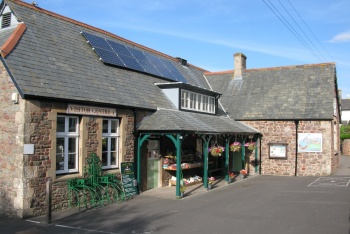
[Main photo: outside view of Porlock Visitor Centre]
Porlock Visitor Centre
If you’re on holiday in Exmoor, pop into this visitor centre in Porlock village for information on the local area and wider national park. They also sell local produce. It’s one of many visitor/information centres in the national park.
Location of Porlock Visitor Centre
Porlock Visitor Centre is located on the western side of Porlock village on the A39 and across the road from The Ship Inn.
Porlock village is located in Porlock Vale that extends inland from Porlock Bay and the Exmoor coast.
We’ve positioned Porlock Visitor Centre on Google maps. Zoom in on the ‘Satellite’ setting to see its location.
Directions to, and parking at, Porlock Visitor Centre
The A39 runs through Porlock. If you’re coming from the west, descend Porlock Hill and enter the village. You’ll see The Ship Inn to your right and Porlock Visitor Centre just off the A39 to your left.
If you’re coming from the east, drive the A39 through the centre of the village to get to the visitor centre.
There’s parking on site which is visible on Google’s mapping. There are other public car parks in Porlock village as well.
Porlock Visitor Centre
‘Visitor information. We stock a wide range of maps, guides, travel information and leaflets.
Craft Centre. We try to source all our products locally and have a lovely range of handcrafted and handmade goods including jams and chutneys, soaps, gifts, jewellery, cards, socks, scarves and much more. We also sell a good range of local interest books from natural history, local history and wildlife, to literature and poetry.
Things to see. We host exhibitions of local interest which change throughout the year. We have a very special topographical map of Exmoor where you can examine the hills and valleys of where you’ve walked or are planning to walk and we have a display of extremely rare aurochs bones, exposed by the sea in 1998.’ (Source. Porlock Visitor Centre website.)
Other Exmoor National Park Visitor Centres
Dunster National Park Visitor Centre. Visitor centre by the main entrance to Dunster.
Lynmouth Pavilion National Park Centre. Visitor centre overlooking the beach and sea at Lynmouth.
Dulverton Heritage Centre and Exmoor National Park Centre. Visitor centre in the heart of the village.
Historical and cultural attractions near near Porlock Visitor Centre
Porlock Weir Harbour. ‘Lying within the attractive Parish of Porlock, Porlock Weir with its whitewashed cottages, ancient inn and stone quay has a most picturesque setting. Although the tidal harbour now provides shelter only for pleasure craft, in the past cargoes including limestone, coal, timber and produce were shipped to and from South Wales and beyond.’ (Source: information board at Porlock Weir car park.)
Porlock and Coleridge’s ‘Kubla Khan’. Explore Porlock and you’ll see lines from the Romantic poet Samuel Taylor Coleridge’s ‘Kubla Khan’. Whilst Coleridge was writing ‘Kubla Khan’, he was interrupted by a ‘person on business from Porlock’ and the poem was never completed.
Coleridge Cottage (National Trust). Visit the cottage in which Coleridge lived and wrote some of his most famous poetry. William Wordsworth lived, briefly, nearby. Note that the cottage is in Nether Stowey on the east side of the Quantock Hills National Landscape.
The Ancient Mariner Sculpture in Watchet. The Watchet and Quantock Hills National Landscape area inspired Samuel Taylor Coleridge to write ‘The Rime of the Ancient Mariner’. Watchet is on the West Somerset coast to the east of Porlock Weir and Exmoor National Park.
Culbone Church. Said to be the smallest parish church in England, Culbone Church is located on the South West Coast Path as it runs west of Porlock Weir and Porlock Weir The Bottom Ship Inn. Wander up to the church and return for a pint.
Allerford Museum West Somerset Rural Life Museum and Victorian School.
Rowbarrows west of Dunkery Beacon. Explore some of Exmoor’s rich prehistory.
Doone Country. Richard Doddridge Blackmore's famous novel 'Lorna Doone' is set on Exmoor. Roughly speaking, Doone Valley/Doone Country runs south of Malmsmead and Oare along Badgworhty Water. It’s surrounded by high moor.
Watersmeet (National Trust). Wonderful National Trust property where Hoaroak Water joins the East Lyn River. Set in a steep-sided and heavily wooded valley, there’s a shop, tea room and garden on site. Watersmeet is part of the National Trust’s West Exmoor property covering ‘some 4000 acres (1600ha) of rocky cliffs, open moorland, steep wooded valleys and fast flowing rivers’. (Source: National Trust information board at Watersmeet.)
Lynmouth Harbour. Popular and pretty harbour between Lynmouth Western Beach and Lynmouth Eastern Beach on the Exmoor coast. Boat trips run from the harbour.
Lynmouth Pavilion National Park Centre. Visitor centre by Lynmouth Harbour.
Lynton and Lynmouth Cliff Railway. ‘The famous Lynton and Lynmouth funicular Cliff Railway opened in 1890 and is the highest and the steepest totally water powered railway in the world!’ (Source: Lynton and Lynmouth Cliff Railway website.)
Minehead Harbour. Harbour in stunning location at the western end of Minehead Beach under North Hill. ‘There has been a harbour at Minehead since the late 1300s.’ (Source: Minehead Harbour website.)
Dunster Castle (National Trust). Impressive National Trust property dominating the beautiful village of Dunster.
Dunster Yarn Market, Butter Cross and Gallox Bridge (English Heritage). English Heritage properties in Dunster.
Cleeve Abbey (English Heritage). Wonderful English Heritage property just east of Exmoor National Park.
Other attractions near Porlock Visitor Centre
Porlock Beach. Big rock and pebble beach at the western end of Porlock Bay.
Porlock Weir Submarine Forest. ‘At low tide it is sometimes possible to see the remains of a submerged forest on the beach. This dates from a time between 7000 and 8000 years ago, when due to climatic conditions the sea level was much lower and the area where the beach is today would have been woodland, and the shoreline several miles further north. The remains of prehistoric cattle called Aurochs have been found here and can be seen in Porlock Visitor Centre.’ (Source: information board at Porlock Weir car park.)
Porlock Ridge and Saltmarsh SSSI/Site of Special Scientific Interest.
South West Coast Path. The Exmoor section of the South West Coast Path is particularly stunning.
Coleridge Way. Another amazing long distance walking path that runs across Exmoor.
Bossington Beach. Big rock and pebble beach at the eastern end of Porlock Bay.
Dunkery and Horner Wood National Nature Reserve. Explore one of England’s largest and most beautiful National Nature Reserves. We’d recommend walking around Horner Wood and then heading up to Exmoor’s highest point at Dunkery Beacon on Dunkery Hill.
Exmoor International Dark Sky Reserve. The night skies above Exmoor, Dartmoor and Bodmin Moor are all exceptional.
Places to eat near Porlock Visitor Centre
Porlock The Ship Inn. Pub in Porlock across the road from the Porlock Visitor Centre.
Porlock Weir The Bottom Ship Inn. Pub overlooking Porlock Weir Harbour at the western end of Porlock Shingle RIdge, Porlock Marsh (National Trust) / Sparkhayes Marsh (National Trust) and Porlock Ridge and Saltmarsh SSSI/Site of Special Scientific Interest.
The Porlock Weir Hotel. Next door to Porlock Weir The Bottom Ship Inn.
Bossington Kitnors Tea Room and Garden. Tea room in Bossington villages behind the eastern end of Porlock Shingle Ridge.
Villages and towns near Porlock Visitor Centre
Porlock Weir. Beautiful harbour village looking out across Porlock Bay.
Bossington. Village by Bossington Beach below Bossington Hill.
Allerford village. Beautiful village further inland known for its packhorse bridge.
Selworthy village. One of the West Country’s prettiest villages, Selworthy is famous for its thatched cottages and village green. Enjoy a cream tea at the Periwinkle Tea Room.
Malmsmead and Oare. Hamlet and village in Exmoor’s Doone Country. Great walking. We’d recommend following the path that runs by Badgworthy Water to the site of the medieval village in Doone Country in the heart of the moor.
Lynmouth. Famous West Country village and part of ‘England’s Little Switzerland’.
Lynton. Again, famous West Country village and part of ‘England’s Little Switzerland’. Sits above Lynmouth and close to The Valley of Rocks.
Photo Gallery
