Webber's Post (National Trust), Porlock, Exmoor National Park
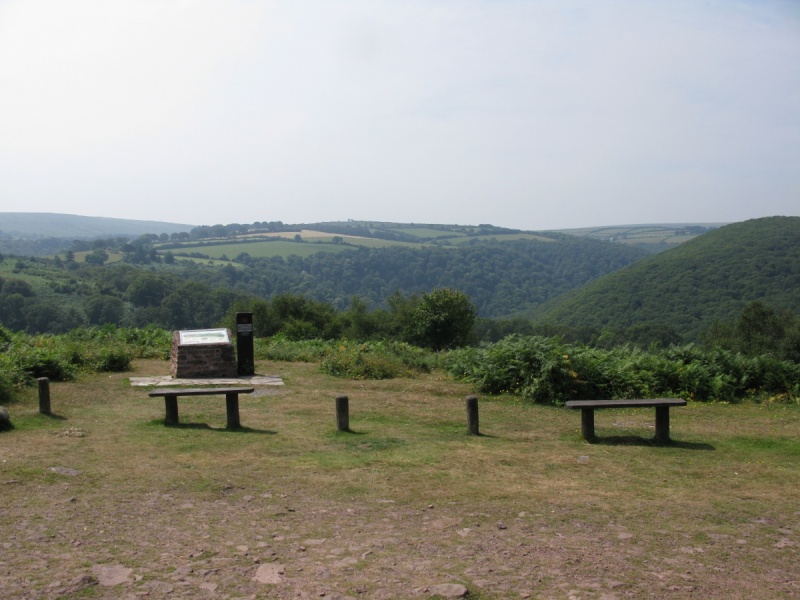
[Main photo: National Trust information board at Webber’s Post]
Webber’s Post (National Trust)
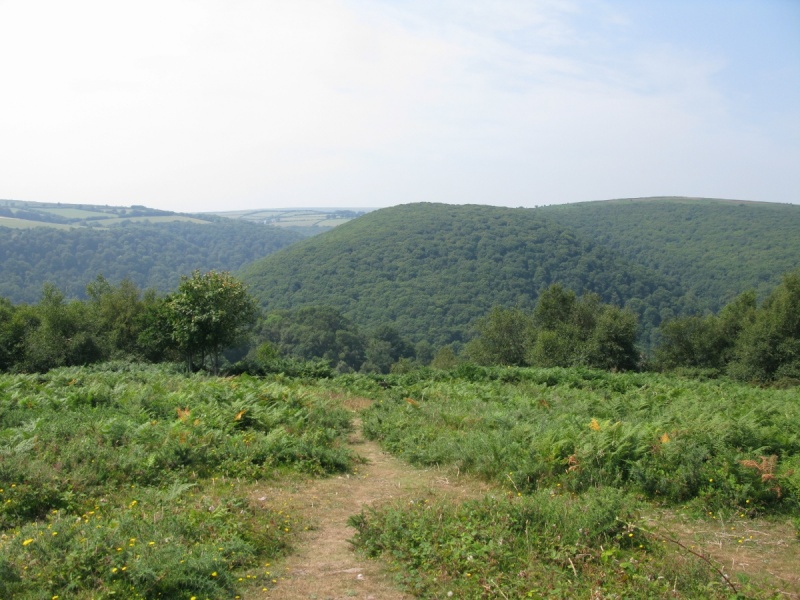
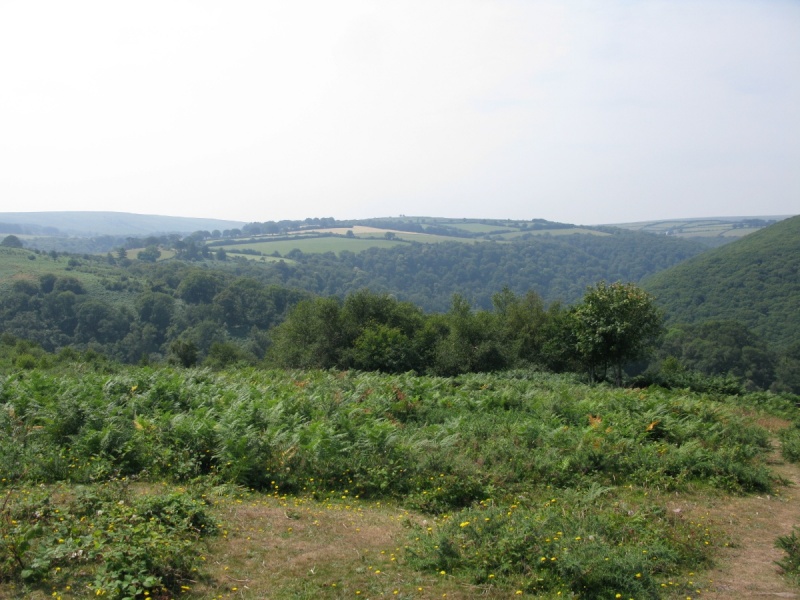
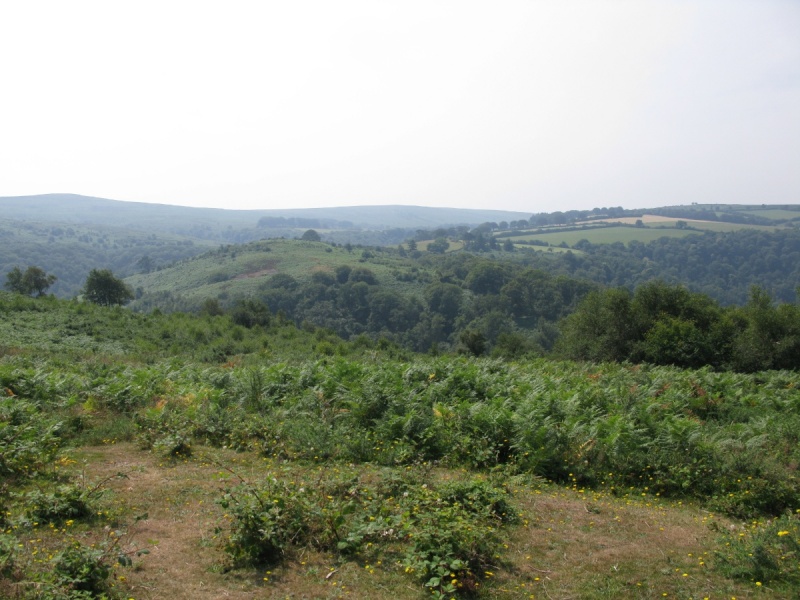
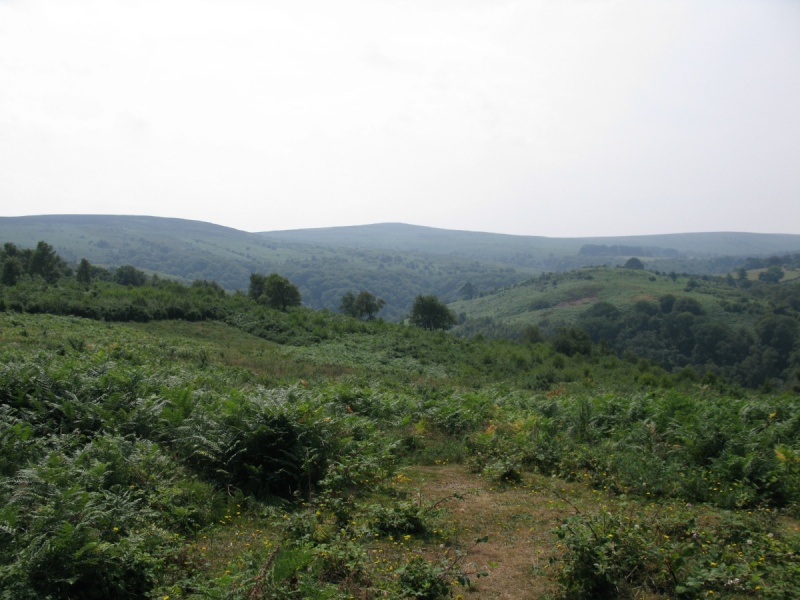
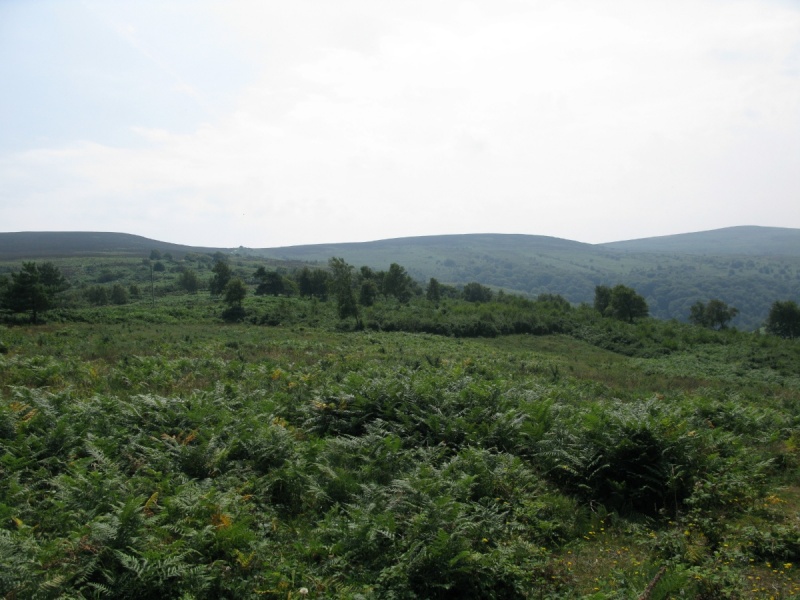
Webber’s Post is a viewpoint and beauty spot in one of the most extraordinary areas in Exmoor National Park. It overlooks Horner Wood. Dunkery Hill and Exmoor’s highest point at Dunkery Beacon rise to the south. These are part of Dunkery and Horner Wood National Nature Reserve. The area is superb for walking. The Coleridge Way, a long distance walking trail, runs past Webber’s Post. Essential visiting if you’re on holiday in Exmoor National Park.
Location of Webber’s Post (National Trust)
Webber’s Post is located between Porlock village and Dunkery Beacon. It’s easily accessible from the moorland road that crosses the east flank of Dunkery Hill.
Luccombe and Horner are in the vale below. The villages Selworthy, Allerford and Bossington sit below the whaleback Bossington Hill. Porlock Bay and Exmoor’s coastline are nearby.
We’ve positioned Webber’s Post (National Trust) on Google maps. Zoom in on the ‘Satellite’ setting to see its location.
Directions to, and parking at, Webber’s Post (National Trust)
Follow the A39 to Porlock and Porlock Vale. Country lanes climb to connect with the abovementioned moorland road that crosses the east flank of Dunkery Hill. Webber’s Post (National Trust) is a large and very noticeable car parking area where woodland meets moorland. Again, we’ve positioned Webber’s Post (National Trust) on Google maps. Zoom in on the ‘Satellite’ setting to see its location.
Webber’s Post (National Trust)
In addition to being a viewpoint and beauty spot, Webber’s Post (National Trust) is a great starting point from which to explore this part of Exmoor. Attractions and points of interest include:
Dunkery and Horner Wood National Nature Reserve. One of England’s largest and most beautiful National Nature Reserves.
Horner Wood. Wonderful place. There are numerous paths that you can follow. Consult Ordnance Survey mapping for detail.
Cloutsham Ball. High ground that provides super views of Horner Wood and Dunkery Hill. We’d recommend walking from Webber’s Post to Cloutsham Ball and then Prickslade Combe before yomping up to the top of Horner Wood. Various paths descend to Horner Water and East Water and it’s then a short, sharp ascent back to Webber’s Post. Amazing in spring and autumn.
Dunkery Hill. High moor. Stunning when the heather is out in autumn.
Dunkery Beacon. The highest point in Exmoor National Park provides massive views of this part of the UK on a clear day.
Coleridge Way. This long distance walking route runs through Webber’s Post.
Webber’s Post (National Trust) information board
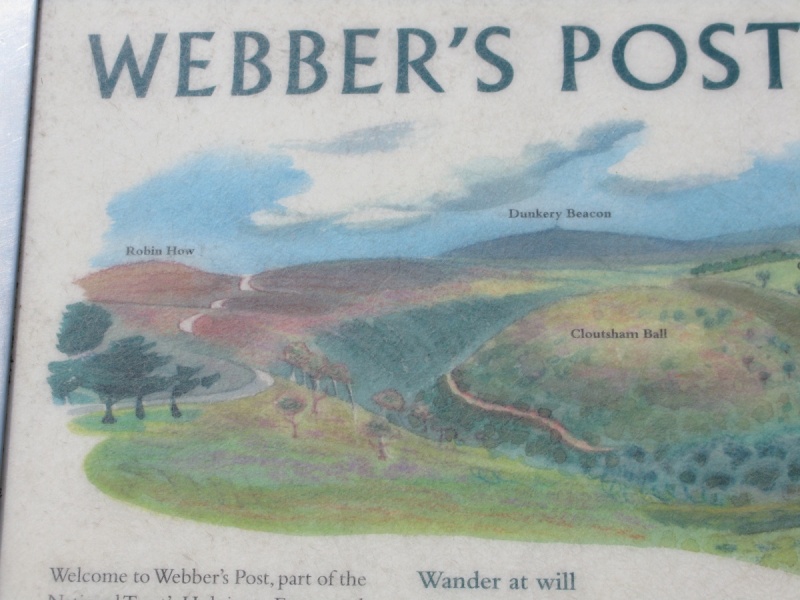
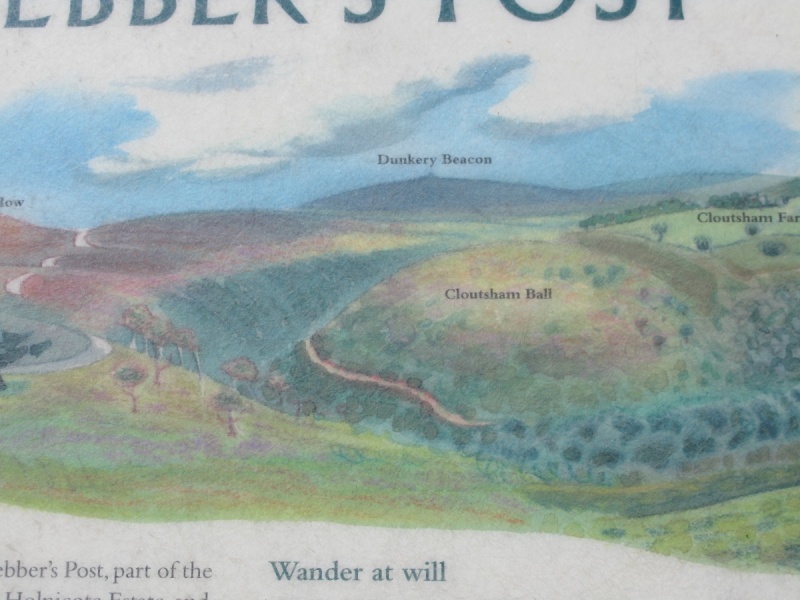
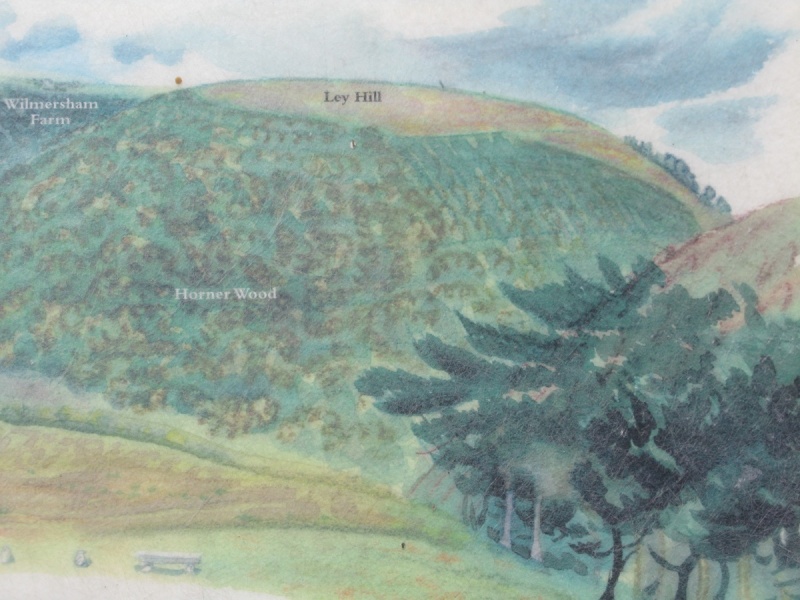
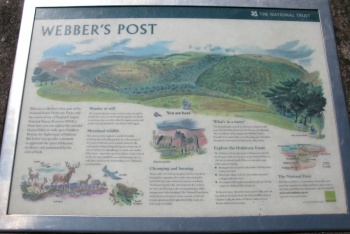
There’s an information board at Webber’s Post overlooking Horner Wood to the west. It reads:
‘Welcome to Webber’s Post, part of the National Trust’s Holnicote Estate, and centre of one of England’s largest National Nature Reserves (NNRs). From here you can explore the wooded Horner Valley or walk up to Dunkery Beacon, the highest part of Exmoor. But before you go, take a moment to appreciate the quiet wilderness; its silence only punctuated by the cries of birds.
Wander at will.The countryside here is open access so you can explore at will. The easy access trail leads through the woodland to stunning views over the valley. It is approximately half a mile long and suitable for wheelchairs and buggies.
Moorland wildlife. The nature reserve supports a wealth of wildlife including rare and endangered species. Red deer is the largest of Britain’s native animals. Listen for the roaring and clashing of stags during the autumn rut. If you are lucky, you might glimpse a merlin, our smallest bird of prey - up to three pairs breed here. Curlews breed on the wet areas, and fill the air with haunting cries. In early June, watch for the heath fritillary, one of Britain’s rarest butterflies.
Chomping and burning. Sheep, cattle and wild ponies graze heather moorland, keeping the vegetation short and so preventing this wonderful open space from turning into woodland. The Exmoor ponies, the oldest breed in the country, are very rare. Burning is also an important part of the management of the heathland. The National Trust burns small patches each year to create a mosaic of old and young vegetation, which provides for the needs of a wide range of wildlife.
What’s in a name? The Acland family owned the Holnicote Estate for 200 years. The first Acland here was Sir Thiomas (7th Baronet) who was Master of the Staghounds. Webber’s Post is thought to be named after a local hunting man who liked the spot for viewing the hounds in the valley below.
Explore the Holnicote Estate. The Holnicote Estate (pronounced Hunnicut) stretches for 20 square miles. It was given to the National Trust in 1944 by the Acland family after 200 years of ownership. Why not visit the estate, including: Bossington Beach and the salt marshes of Porlock Bay, a haven for birds. Selworthy village with its warm yellow thatched cottages and rural views. Bossington Hill, heather moorland with spectacular views over Porlock Vale and the sea. To discover more about the estate and its walks, you can buy Holnicote leaflets from the National Trust shop at Dunster Castle, the Porlock Visitor Centre or local Tourist Information Centres.’ (Source: information board at Webber’s Post.)
The views from Webber’s Post (National Trust)
Horner Wood. The mass of trees to the west.
Ley Hill. The high ground above the tree line to the west.
Cloutsham Ball. Below Dunkery Hill, in the foreground. Cloutsham Farm is beyond.
Dunkery Hill and Dunkery Beacon are high up to the south and south west.
Historical and cultural attractions near Webber’s Post (National Trust)
Allerford Museum West Somerset Rural Life Museum and Victorian School.
Rowbarrows west of Dunkery Beacon. Explore some of Exmoor’s rich prehistory.
Further away, visit:
Minehead Harbour. Harbour in stunning location at the western end of Minehead Beach under North Hill. ‘There has been a harbour at Minehead since the late 1300s.’ (Source: Minehead Harbour website.)
Dunster Castle (National Trust). Impressive National Trust property dominating the beautiful village of Dunster.
Dunster Yarn Market, Butter Cross and Gallox Bridge (English Heritage). English Heritage properties in Dunster.
Cleeve Abbey (English Heritage). Wonderful English Heritage property just east of Exmoor National Park.
The Ancient Mariner Sculpture in Watchet. The Watchet and Quantock Hills National Landscape area inspired Samuel Taylor Coleridge to write ‘The Rime of the Ancient Mariner’.
Coleridge Cottage (National Trust). Visit the cottage in which Coleridge lived and wrote some of his most famous poetry. William Wordsworth lived, briefly, nearby.
Doone Valley/Doone Country. Richard Doddridge Blackmore's famous novel 'Lorna Doone' is set on Exmoor. Roughly speaking, Doone Valley/Doone Country runs south of Malmsmead and Oare along Badgworhty Water. It’s surrounded by high moor. Great walking.
Gardens near Webber’s Post (National Trust)
Selworthy Green (National Trust). 'There has been a village here since medieval times, but the current cottages were designed by Sir Thomas Dyke Acland in 1828 to create attractive homes for estate pensioners. Beyond the church (14th century), you'll find the village green, surrounded by warm yellow thatched cottages. Notice the tall chimneys which helped to draw the fire and carry sparks away from the thatch.' (Source: information board at Selworthy.)
Further away, visit:
Minehead Blenheim Gardens. Popular gardens behind the Esplanade and North Road at the western end of Minehead Beach.
Dunster Gardens, Dovecote and Tithe Barn. Gardens in the centre of Dunster village.
Dunster Castle (National Trust). The castle is surrounded by many gardens and heavily wooded walkways. The Keep Garden tops the hill on which the castle sits. Lawn’s Bridge, Marshall’s Bridge and Lovers’ Bridge span the River Avill on the eastern side of the castle.
Knightshayes (National Trust). Impressive gardens just off the A396 between Exmoor National Park and Tiverton.
Cothay Manor. Again, gardens outside the national park near Wellington and the M5.
Hestercombe House & Gardens. Gardens located just south of the Quantock Hills National Landscape near Taunton and the M5.
If you don’t mind the drive, RHS Garden Rosemoor by Great Torrington south west of Exmoor National Park is magnificent.
Other attractions near Webber’s Post (National Trust)
Porlock Beach. Big rock and pebble beach at the western end of Porlock Bay.
Porlock Weir Harbour. Beautiful harbour with pub and hotel.
West Somerset Railway. Heritage railway running between Minehead and Bishops Lydeard.
Dunster Estate (The Crown Estate). Home to England’s tallest tree. Great for walks and views. Wander up to Conygar Tower.
Dunster Beach. Massive low tide sand and stone beach.
Villages and towns near Webber’s Post (National Trust)
Horner village. Another beautiful Exmoor village at the bottom of Horner Wood by Horner Water. Enjoy a cream tea at Horner Tea Gardens.
Luccombe. Village not far from the viewpoint and large car park at Webber’s Post with thatched cottages like those at Selworthy.
Selworthy village. One of the West Country’s prettiest villages, Selworthy is famous for its thatched cottages and village green. Enjoy a cream tea at the Periwinkle Tea Room.
Allerford village. Beautiful village further inland known for its packhorse bridge.
Bossington. Village by Bossington Beach below Bossington Hill.
Porlock. Famous West Country village in Porlock Vale.
Porlock Weir. Amazing coastal village with harbour, pub, hotel and beach.
Minehead. Popular West Country resort town with huge beach and harbour. The start/end of the South West Coast Path.
Dunster. Essential visiting. Beautiful village dominated by Dunster Castle (National Trust) with English Heritage properties, Dunster National Park Visitor Centre and plenty of shops and places to eat and drink. Park of Dunster Estate (Crown Estate) with England’s tallest tree and super walk and views.
Photo Gallery